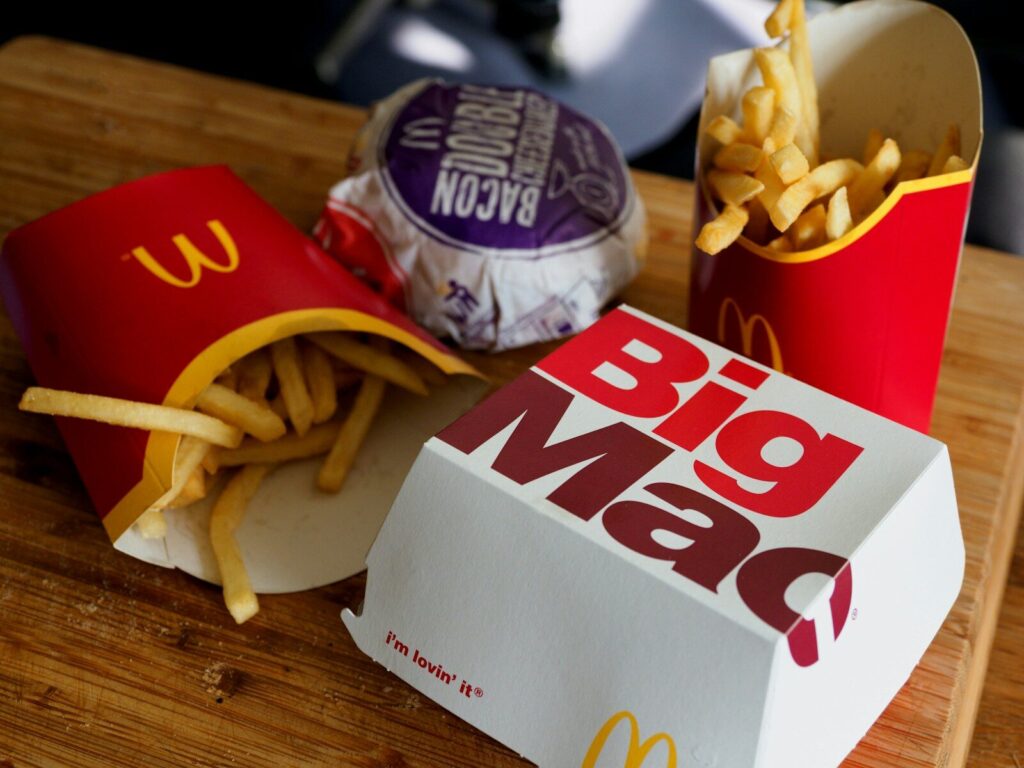
A McDonald’s franchisee in Knoxville once called Ray Kroc with a problem. A competitor down the street was selling hamburgers for a lower price. The franchisee wanted permission to match the price. Kroc said no. If a competitor could win on price alone, Kroc said, McDonald’s deserved to lose. It sounded irrational. It wasn’t. The Ray Kroc business strategy that built McDonald’s had little to do with price and everything to do with what happened inside the restaurant.
Price wars were a distraction. Kroc believed the real battle was fought somewhere else—inside the restaurant. The strategy was simple: focus obsessively on quality, service, cleanliness, and value. Do those four things better than anyone else, and competitors eventually exhaust themselves.
“Greatness is just good repeated.” – Ray Kroc
Ray Kroc Business Strategy: Fundamentals Beat Flash
McDonald’s began expanding rapidly in the 1950s. Kroc realized something quickly: growth required systems. Every new franchise needed someone to train crews and install the system. Kroc had people like Art Bender and Ed MacLuckie, but growth outpaced them.
This bothered Kroc. He insisted on four fundamentals: quality, service, cleanliness, and value. Kroc wanted them drilled into every procedure. Every crew member had to learn the system—almost like military training. Those fundamentals usually guaranteed success. Bad locations were rare anyway.
Kroc knew these principles didn’t come naturally. Most employees arrived without them. So Kroc repeated it endlessly. He stressed them constantly.
Kroc wrote in Grinding It Out, “If I had a brick for every time I repeated the phrase Q, S, C, and V – quality, service, cleanliness, and value – I could bridge the Atlantic Ocean.” His point was simple: repeat the fundamentals, especially in a brand-new store.
He believed excellence came from repetition. Systems win. Repetition builds culture.
Kroc viewed QSC&V as a three-legged stool: franchisees, suppliers, and the corporation. He was maniacal about it. Kroc pushed for standardization. He was fanatical about spotless restaurants—even if it meant cleaning them himself. He wanted them to be welcoming.
For Kroc, quality meant uniformity. Food specifications were strict. He wanted the same experience in every store. A customer in Ohio should get the same meal as one in California.
Service meant speed and friendliness. Kroc wanted something faster than traditional restaurants. He pushed franchisees to improve service.
Cleanliness mattered because Kroc was obsessed. He said it plainly: “If you’ve got time to lean, you’ve got time to clean.” He personally inspected bathrooms. Managers and executives were expected to pick up trash.
Value was simple. Customers should be able to afford a meal. But not at the expense of quality. Kroc wanted the highest quality food at the lowest possible price.
Those four ideas sound obvious. They weren’t. Kroc joked he repeated them enough to build a bridge across the Atlantic. But repetition built something else: a system.
Ray Kroc Business Strategy: Perfection in the Details
Ray Kroc once had Multimixer reps scattered across the country. For a time, he kept the biggest accounts for himself—Howard Johnson’s, Dairy Queen, Tastee Freeze. Eventually, he gave them up. McDonald’s demanded his full attention. His future was tied to McDonald’s.
After long days on the road, Kroc drove back to the McDonald’s in Des Plaines to check on the store. He loved seeing the golden arches appear in the distance. It felt like his store. But some nights the store disappointed him. Sometimes it wasn’t up to his standard.
One problem was Ed MacLuckie. MacLuckie sometimes forgot to turn on the McDonald’s sign at dusk. Trash occasionally sat on the ground. They were honest mistakes, MacLuckie explained. He simply hadn’t gotten to them yet. Most people wouldn’t care. It infuriated Kroc. Kroc would explode.
MacLuckie took the yelling in stride. Kroc knew MacLuckie cared about details. But that didn’t matter. Kroc wanted perfection. For Kroc, anything less meant standards were slipping.
When the sign stayed dark. When trash sat in the parking lot. Kroc saw something else. A small crack in the system. Perfection lived in details. Turning on the sign. Picking up the trash. Kroc believed when small standards slip, bigger ones follow.
Perfection is in the small things. That philosophy scaled McDonald’s. He was obsessed with the details. Focus on small things long enough, and you can build something enormous.
Attention to the details showed up everywhere. Kroc scraped gum off parking lots himself. He inspected the bathrooms. He believed a clean store created trust. Customers came back because they trusted what they’d get.
Kroc enforced detailed standards. He was strict with all franchisees. Every part of the experience had to be the same. Fries had to taste the same. Oil temperatures had to match. The goal was consistency.
The McDonald’s brothers perfected the burger. Kroc perfected the system. He believed big ideas failed without small details. Kroc wanted consistency. Both allowed him to scale McDonald’s. Take care of the customer, and they’ll take care of you.
Kroc didn’t scale McDonald’s with better ideas. He scaled it with better discipline. The system worked because the details did.
Beat Competition With Strength, Not Imitation
Joe Post was the kind of competitor you didn’t want to face. His success in Chicago, then Florida and Missouri, attracted imitators. Kroc was relieved that Post worked for him. Post thrived on competition.
Competitors followed McDonald’s real estate strategy. They built near new McDonald’s locations. Sometimes right next door. Post loved it. He fed off it. He preferred it that way.
Post picked them off. One by one. “Keep them coming,” he said. He didn’t copy them. He beat them by doing what McDonald’s did best: quality, service, cleanliness, and value. That’s what customers wanted. And McDonald’s delivered it.
Kroc believed in a simple approach. He said, “Stress your own strengths, emphasize quality, service, cleanliness, and value, and the competition will wear itself out trying to keep up.”
Kroc didn’t obsess over competitors. He and Post doubled down on their strengths. He let competitors react. Kroc controlled quality, service, cleanliness, and value. He ignored the rest.
Kroc believed in focusing on his own business. He believed that if McDonald’s operated at a high level, competitors would eventually burn out trying to keep up.
Kroc had an intense determination. He presented a positive approach publicly. He also had an edge: “If my competitor were drowning, I’d stick a hose in their mouth.” Competition, to Kroc, was brutal.
He knew competitors could copy the product. But they couldn’t replicate the system behind it. That system belonged to McDonald’s.
Kroc didn’t try to beat competitors at their game. He forced them to play his. Most couldn’t keep up.
Final Takeaways
Kroc didn’t invent the hamburger. He didn’t invent fast food. What he built was harder to copy. A system. And he repeated it—store by store—until it became impossible to ignore.