Ample Hills Creamery began as a husband-and-wife ice cream shop in Brooklyn, serving some of the city’s best ice cream. It quickly attracted famous fans, including Bob Iger and Oprah Winfrey. Success brought opportunity. The founders chased nearly every opportunity that came their way. They stopped focusing on the thing that made the business special. They built a massive factory, signed complex partnerships with The Walt Disney Company, expanded faster than the business could support, burned through cash, and eventually filed for bankruptcy.
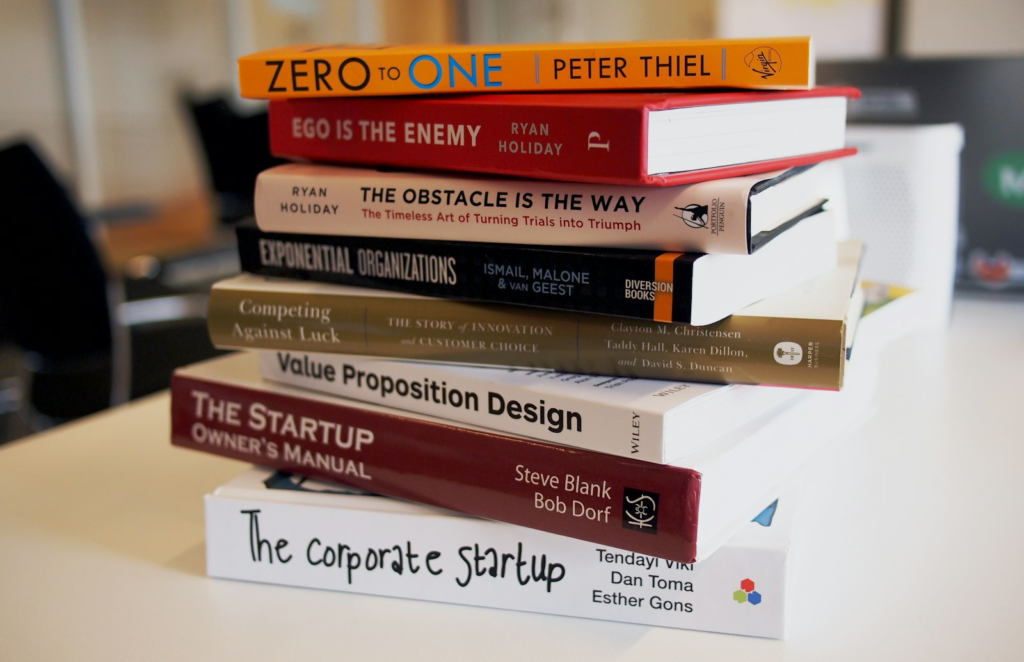
In Zero to One, Peter Thiel offers a different business strategy. Identify the handful of things that can genuinely make your business better. Then say no to everything else, even opportunities that seem irresistible, like a partnership with Disney. Protect your attention with the same discipline you bring to protecting your capital. Separate signal from noise. Decide what’s essential. Cut everything that doesn’t move the business forward. Align your team around these priorities.
Every university seems to reassure you that it doesn’t matter what you do, as long as you do it well. That is completely false. It does matter what you do. You should focus relentlessly at something you’re good at doing, but before that you must think hard about whether it will be valuable in the future. — Peter Thiel
A Bad Plan Is Better Than No Plan
In the mid-1960s, Fred Smith, then a student at Yale, submitted a term paper outlining an overnight package delivery system. It was a revolutionary, capital-intensive idea. His professor wasn’t impressed. Quite the opposite. He told Smith the idea wasn’t practical. Smith built it anyway.
Then came the hard part. FedEx was losing millions. Debt was piling up. The company was on the verge of bankruptcy. It was literally running out of cash to fuel its planes.
Smith’s overnight delivery idea had one enormous advantage: it was a plan. A flawed plan is still better than no plan. It gave him a framework for every decision. He knew where he was headed. The plan kept him moving.
Eventually, desperation set in. His airplanes needed fuel. Smith flew to Las Vegas. He sat down at a blackjack table and won. He flew back to Memphis with enough cash to keep the company alive. The money bought him enough time to raise additional capital.
The gamble worked. FedEx survived its near-death experience. The company refined its original plan. Smith eventually built one of the world’s great logistics companies. It all began with an imperfect plan that was better than no plan at all.
The plan gave him a framework for interpreting what the business was telling him. Without a plan, there’s no benchmark. Every piece of information looks important.
Executing an imperfect plan revealed problems he could not have anticipated in advance.
That’s why Zero to One argues that having an imperfect plan is better than wandering through a crowded market without one.
Thiel argues that startups should stay lean and flexible. In his view, “lean” often becomes a code word for unplanned. He argues founders shouldn’t already know exactly where the business is headed. Detailed long-range planning often becomes rigid and arrogant. Experiment. Learn. Treat building a company as an ongoing experiment.
The future belongs to people trying to create it. An imperfect plan is often the fastest path to making the future real.
Life Is Not a Portfolio
By the late 1990s, Apple was on the brink of bankruptcy. Like many large companies, it had fallen into portfolio thinking. It sold dozens of confusing computer models, personal device assistants, servers, monitors, and even digital cameras. Instead of placing one great bet, Apple was making dozens of mediocre ones. Peter Thiel calls this indefinite optimism: believing somehow the future will work itself out without making deliberate choices.
Then Steve Jobs returned as CEO. He looked at Apple’s sprawling product lineup. Jobs realized Apple was trying to be everything to everyone while becoming mediocre at everything. He didn’t make incremental improvements. He demolished the product portfolio.
Jobs took a sledgehammer to Apple’s roadmap. Entire product teams disappeared overnight. He famously drew a two-by-two grid: consumer and professional across the top; desktop and portable down the side.
Everything else had to fit inside one of these four boxes. Apple would build just four core products: the iMac, Power Mac, iBook, and PowerBook.
He stopped Apple from behaving like an index fund. Every employee suddenly knew what mattered. That focus pulled Apple back from the edge. It also created the foundation for the iPad, iPhone, and everything else that followed.
Peter Thiel uses Apple’s turnaround to make a broader point in Zero to One: life isn’t a portfolio. Not if you’re building a company. Not if you’re building a career.
Entrepreneurs can’t diversify themselves. You can’t build dozens of startups and expect each one to succeed.
It matters enormously what you choose to work on. Focus relentlessly on something you’re uniquely good at. Before you begin, ask whether the work will still matter years from now.
Investors diversify. Entrepreneurs can’t.
Great Companies Require Great Teams
When Steve Jobs redesigned Pixar’s headquarters in the early 2000s, he wasn’t thinking about architecture. He was thinking about collisions. He designed the building to force animators, scientists, and executives to run into one another.
The original layout kept these groups separated. Jobs moved the mailboxes, meeting rooms, cafeteria, and even the gift shop into one central atrium.
Suddenly, chance encounters became part of the workday. Artists challenged engineers. Engineers challenged artists. Better ideas emerged because different disciplines kept colliding.
Pixar President Ed Catmull later wrote that the goal wasn’t simply to hire brilliant people. It was to build an environment where brilliant people made one another better.
Zero to One reaches the same conclusion. Founders matter, but so do the people around them. Great companies depend on teams that trust one another.
Thiel acknowledges the obvious counterargument. If alignment is the goal, why not work alone? One person never has to worry about office politics or disagreements.
But working alone also limits what you can build. It’s also hard to go from zero to one without a great team. Pixar proved why.
A founder can begin alone. Scaling is another matter entirely. The strongest companies are aligned around one mission. Ultimately, the quality of the team often determines whether a great idea becomes a successful company.
Focus on What Matters
Plans will be imperfect. Operating without one guarantees mediocrity. The future belongs to people trying to create it. They focus on work they’re uniquely equipped to do, and that will still matter years from now. They surround themselves with exceptional teammates who turn ambitious ideas into enduring businesses.