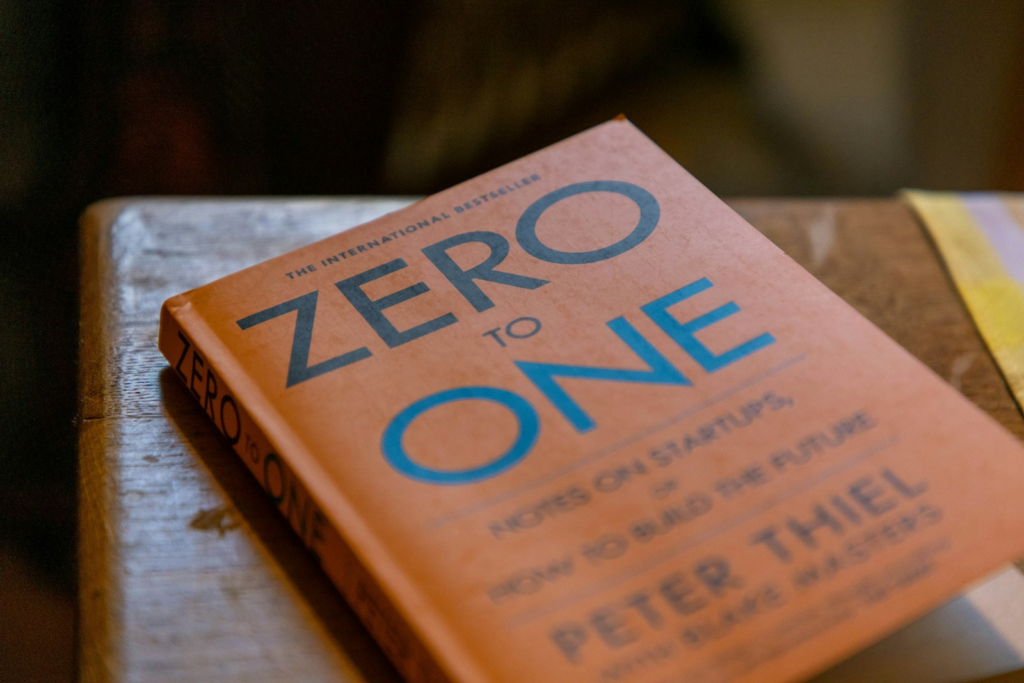
Peter Thiel’s venture fund is looking for the next big winner. It’s the early 2000s. His team comes across a little-known startup called Facebook. Instead of spreading their money around, they make a highly concentrated bet. That single investment returns thousands of times its original cost. The Facebook investment ultimately generated more profit than every other investment in the fund combined. It’s a powerful example of the entrepreneur mindset: extraordinary results rarely come from ordinary decisions.
Traditional investing says diversification is king. Thiel did the opposite. He invested a substantial amount of capital in a website used mostly by college students. That company didn’t just grow. It came to dominate social media. It proved a lesson most investors struggle to accept: one giant winner can be worth more than hundreds of small successes. Thiel was willing to look wrong. More importantly, he understood that extraordinary outcomes often come from concentrated bets.
Risk Boldness, Not Triviality
It’s the 1990s. The World Wide Web is beginning to reach the public. Investors, terrified of missing the next big thing, poured money into any company with “.com” attached to its name. Many ignored traditional metrics like cash flow. They focused on getting big fast by spending enormous amounts of cash. The Nasdaq surged to a historic peak in early 2000.
Many of these companies had no business model and burned through cash at breakneck speed. Pets.com became the poster child. To cool the economy, the Federal Reserve raised interest rates. This made tech stocks less attractive as investors found better returns elsewhere. Then investors panicked. Beginning in March 2000, they rushed for the exits.
Hundreds of companies disappeared. The carnage wasn’t limited to websites. Telecommunications companies that invested in fiber-optic cable were left holding the bag when demand never showed up. By October 2002, many investors had lost their shirts. The technology industry was forced to rebuild.
While many companies failed, the groundwork of the internet’s infrastructure that we rely on today was laid. Companies like Amazon, with actual business models that generated cash, went on to dominate their market.
In Zero to One, Thiel argues that Silicon Valley drew four conclusions from the crash. Think small. Stay lean. Compete in existing markets. Focus on product over sales.
Thiel says these lessons have become dogma in the startup world. Those who ignored them are presumed to be the ones who invited the great crash of 2000.
But Thiel also says the opposite principles are likely more correct. First, it’s better to work on what’s significant than something insignificant. Two, a bad plan is better than no plan at all. Three, competitive markets destroy profits and drive down margins for everyone. Fourth, sales matter just as much as the quality of your product.
The lessons for builders are simpler than Thiel’s framework makes them sound. Make progress on work that matters. Spend carefully. Avoid commodity markets. Build something people want. Never assume a great product can succeed without great distribution.
Every Great Business Starts with a Secret
Roommates Joe Gebbia and Brian Chesky couldn’t pay their rent in San Francisco in 2007. A big design conference was coming to town. All hotels in the city were booked. Gebbia and Chesky had a wild idea. They bought air mattresses and rented out floor space in their apartment to conference attendees. They promised all guests a warm, homemade breakfast every day of their stay. The two created a website and called it AirBed & Breakfast.
The idea didn’t take off. They struggled. Gebbia and Chesky sank into credit card debt. To survive, they sold custom cereal boxes during the 2008 presidential election. Eventually, they discovered the secret at the center of the business: people were willing to sleep in strangers’ homes. So they dropped the “breakfast” part of their business name. Gebbia and Chesky shifted the business and built a worldwide travel marketplace. Today, that secret is worth billions of dollars. This is the entrepreneur mindset in practice: discovering a truth that everyone missed.
Zero to One argues that every business starts with a secret. But who do you tell? Tell whoever you need to, but not one more person. There’s a balance between telling no one and telling everyone, and that’s what makes a business. The best entrepreneurs know this.
Every great business begins with a truth that’s obvious to insiders and invisible to everyone else. Great companies are a conspiracy to change the world. Peter Thiel says that when you share your secret, the recipient becomes a fellow conspirator.
A secret is a truth most people haven’t yet realized. Every breakthrough company, like Airbnb, begins with one. Like Airbnb, Google believed it could make internet search better. Similarly, Facebook’s thesis was that eventually everyone would have an online identity that would be central to everyday life. The builders of these companies all asked the same question: What do I believe that very few people will agree with me about?
For builders, Thiel advises sharing your secret with the minimum number of people who need to know. Build a company around that secret. Companies who’ve had world-changing success start with their own secret by creating a new market.
The Best Opportunities Are Often Overlooked
It’s the mid-2000s. Venture capitalists are jumping into the clean energy space. Rising energy costs, early clean energy company successes, and government incentives have investors focused on solar, biotech, and battery technology companies. Their investment thesis was straightforward: new clean energy companies would disrupt the legacy utilities and energy markets.
By the early 2010s, many investors were learning how hard energy is. First, many treated hardware startups, which required billions for manufacturing and scale, like software startups. Second, climate tech founders learned that electricity is a commodity. Most customers cared less about where electricity came from than what it cost. This made it challenging for more expensive renewable electricity to compete head-to-head with traditional energy supply in the early days. Third, many startups got caught between testing in the lab and commercialization. Without patient capital, many startups ran out of money before they found customers. Fourth, companies that quickly burned through capital went bust. They couldn’t raise more money to keep going.
Although there was carnage in the early 2010s, not all was lost. The capital raised during the boom laid the groundwork for the modern clean tech industry, with standouts that included Tesla, Enphase Energy, and Sunrun. These survivors, among others, proved that financial and business model innovation were the key to scaling their businesses and the clean tech industry.
Zero to One uses this as an example of the importance of doing something different, like cleantech, which is truly good for society. It allows businesses to profit by monopolizing a new market. The best opportunities are likely to be overlooked, not pumped up by the crowd. The best problems to solve are the ones no one is trying to solve. The entrepreneur mindset isn’t about chasing trends. It’s about finding opportunities hidden beneath them.
The 1990s had one giant idea: the internet was going to change everything. The problem was that too many internet companies had the same thesis. Few had unique ideas.
An entrepreneur can’t have macro-level insights without mastering the micro-level insights. Clean tech companies faced this same conundrum. No matter how much the world needs energy, the only companies that make money are those with a novel solution to a problem.
No sector will ever be so important that merely participating in it will be the way to build an enduring company.
The internet bubble was far more of an epic collapse than the clean tech 1.0 bubble. The internet crash was arguably more painful for investors. The internet dream of the 1990s turned out to be right: skeptics doubted the internet would fundamentally change publishing and retail sales, or that we’d have a social life on the internet.
A valuable business must find a niche and dominate a small market. Facebook started as a service at one university before spreading to other universities and eventually the world.
Finding a small market for energy solutions will be hard. Zero to One says you could aim to replace diesel generators on small remote islands with solar and batteries. You could place modular reactors on military bases in hostile areas. Interestingly, the challenge for clean tech 2.0 entrepreneurs is to think small.
Thiel’s recommendations seem overly simplistic: Do something different that’s truly good for society. What’s beneficial for humanity is solving problems no one else is looking to solve. The companies that make money solve problems everyone else ignores. The businesses that become profitable find a niche and dominate a small market.
The entrepreneur mindset
Zero to One argues that you should take small steps while pursuing ambitious goals. Progress requires flexibility and a plan. Once you get moving, build products that are meaningfully different than the competition. Sales and product both matter. Every great business understands these ideas. They also possess a secret that outsiders don’t yet see. The entrepreneur mindset begins with seeing the world differently. The world rewards conformity right up until the moment someone changes it.